Loading…

Opinion
Aryna Sabalenka's press conference outburst at Flushing Meadows has been widely defended - but the reporter's question was entirely legitimate, and the reaction tells us more about the culture of modern tennis than about any lack of preparation.
VIASPORT is dedicated to women's sport, providing comprehensive coverage of the world's biggest competitions. We follow the leading leagues, tours, and tournaments throughout the season with the latest news, fixtures, results, standings, rankings, transfers, and analysis.
Our football coverage includes competitions such as the National Women's Soccer League (NWSL), Women's Super League (WSL), Liga F, Frauen-Bundesliga, Première Ligue, Serie A Femminile, Toppserien, A-Liga, and Damallsvenskan. In tennis, we cover the WTA Tour and all four Grand Slam tournaments, while our golf coverage focuses on the LPGA Tour, the Ladies European Tour (LET), and the sport's major championships.
From domestic leagues to the biggest international events, VIASPORT brings together women's football, tennis, and golf in one dedicated destination.
There is a peculiar reflex in modern tennis commentary: whenever a top player bristles at a press conference question, everyone rushes to declare the journalist out of order. It happened again at Flushing Meadows this week, and this time it was Aryna Sabalenka setting the tone.
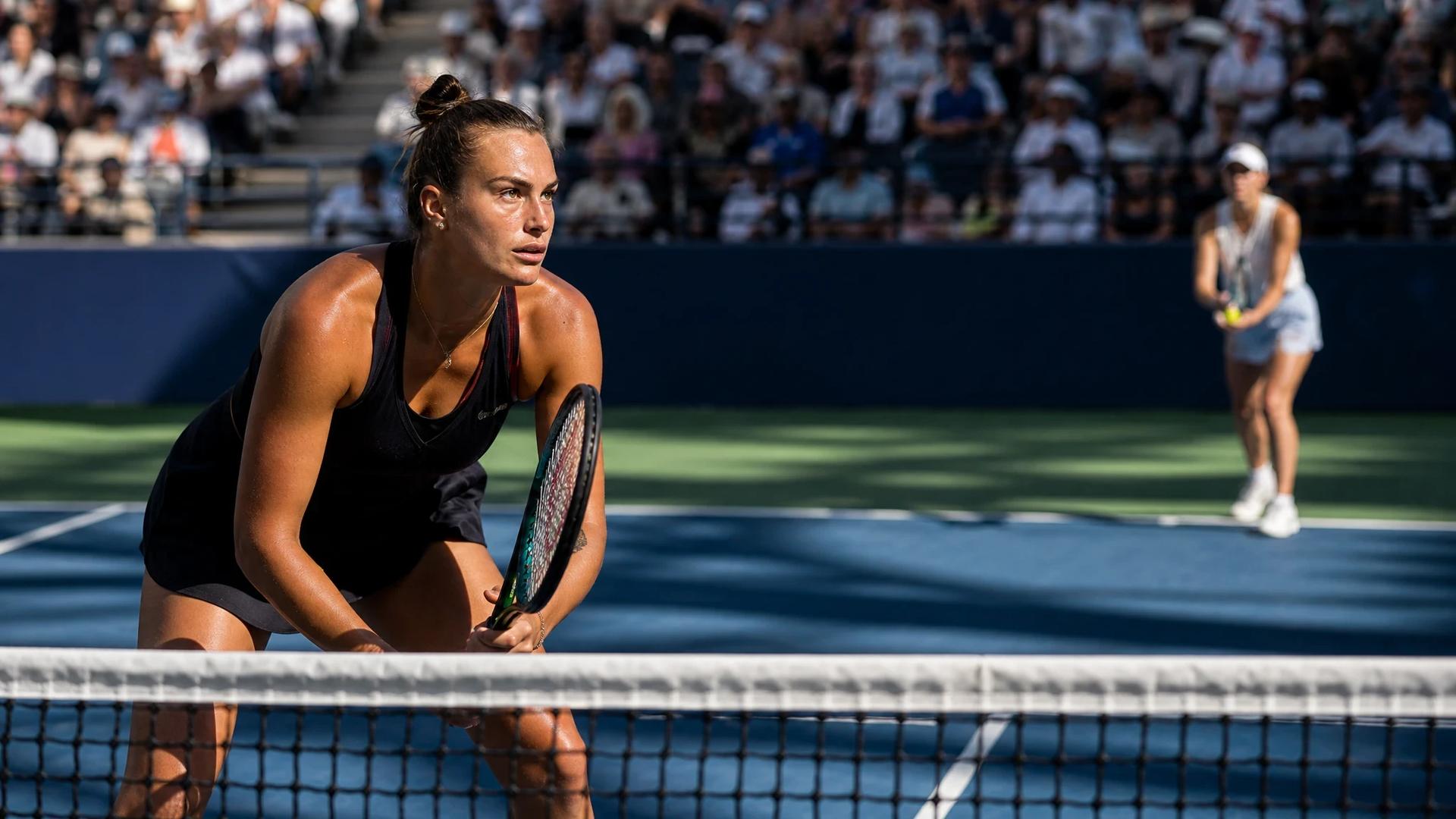
After dismantling Polina Iatcenko 6-1, 6-1 in under an hour - business as usual for the defending champion - a reporter asked about her social activities in the run-up to the tournament. Sabalenka snapped. She challenged the relevance of the question, insisted that posting on social media did not mean she had neglected her preparation, and made clear she found the entire line of enquiry beneath her.
Former British number one Johanna Konta leapt to Sabalenka's defence, citing sponsor obligations and insisting that the Belarusian's professionalism should never be questioned. Fine. Nobody seriously doubts that Sabalenka trains hard. Nobody who watched that 6-1, 6-1 demolition could argue she arrived at Flushing Meadows unprepared.
But that is not the point.
The question was not an accusation. It was an inquiry - the kind journalists are supposed to make. Top athletes choose to broadcast their lives on social media precisely because it generates attention. You cannot curate a public persona, invite the world to watch your every move, and then act offended when someone in a press room asks about it.
Elite sport comes with a contract. The prize money, the sponsorship deals, the platform - all of it is underwritten by public interest. Press conferences exist to serve that interest. A reporter asking whether pre-tournament partying might affect performance is not crossing a line; it is doing the job.
Sabalenka is well within her rights to answer firmly. She can say: "I trained every day. My results speak for themselves." That would have been sufficient and dignified. Instead, she chose indignation - and a chorus of pundits rewarded her for it.
There is a growing trend of players treating press obligations as an inconvenience to be endured rather than a legitimate part of their professional lives. That attitude deserves pushing back on.
Sabalenka's form is beyond reproach. Her 6-1, 6-1 scoreline against Iatcenko was devastating, and she remains a clear favourite to retain her title. Kamilla Rakhimova awaits in the next round and will likely face a similar fate.
None of that exempts Sabalenka from fair questioning. If anything, her dominance on court made the press conference flare-up entirely unnecessary. A confident, composed answer would have killed the story in seconds. Instead, the snap gave it oxygen.
Athletes who demand respect for their professionalism might start by extending the same courtesy to the professionals sitting across the table.
Written by
Updated
Copyright 2026 VIASPORT
Eva Hernández, Editor-in-Chief
VIASPORT uses AI to generate, enhance, and quality-assure its journalism. While we strive to create engaging and accurate material, imagery, grammar, and spelling may occasionally deviate from conventional standards.